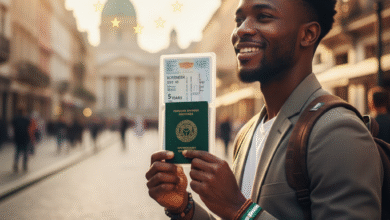
Jetting off to Australia for higher education is a life-changing milestone. With its world-class universities, breathtaking coastlines, and vibrant multi-cultural cities, the “Land Down Under” is a dream destination. However, moving across the world requires immense preparation—especially with Australia’s strict immigration frameworks.
To help you settle into your new home safely and legally, this comprehensive relocation guide outlines everything you need to know, from your pre-departure checklist to navigating your first week on campus.
📋 Phase 1: The Essential Pre-Departure Checklist
Your transition begins long before your flight takes off. Ensure these high-priority tasks are completely sorted out:
1. Secure Your Student Visa (Subclass 500)
To enter Australia legally as a student, your Subclass 500 Visa must be officially granted. Keep in mind that visa processing prioritizes clear, evidence-based applications. Ensure you meet the core criteria:
-
Confirmation of Enrolment (CoE): Issued by your university after you accept your offer. It must be valid and registered under the Commonwealth Register of Institutions and Courses for Overseas Students (CRICOS).
-
Genuine Student (GS) Requirement: You must submit precise answers demonstrating that your chosen course legitimately aligns with your academic background and future career goals.
2. Up-to-Date Financial Proof
Australia requires international students to show strong financial capacity to ensure they can live comfortably without relying entirely on part-time work. You must provide bank statements, loan approvals, or scholarship certificates proving you meet the current threshold:
-
Primary Student Living Cost: At least $29,710 AUD per year (excluding your actual tuition fees).
-
Accompanying Partner/Spouse: An additional $10,394 AUD.
-
First Accompanying Child: An additional $4,449 AUD.
3. Overseas Student Health Cover (OSHC)
You cannot land in Australia without active health insurance. Your OSHC policy must cover you from the exact day you land until the day your visa expires.
✈️ Phase 2: What to Pack & Airport Customs
Australia has some of the strictest biosecurity and customs laws in the world to protect its unique ecosystem. Breaking these rules can result in heavy on-the-spot fines.
What MUST Go in Your Carry-On Luggage
Never pack your critical legal documents in your checked bags. Keep these in your backpack for easy inspection at border control:
-
Valid Passport and Visa Grant Notice
-
Printed Copy of your final eCoE
-
OSHC Health Insurance Certificate
-
Academic transcripts or original certificates
-
Valid medical prescriptions for any necessary personal medication
The Incoming Passenger Card (IPC)
On your flight, the airline will distribute an Incoming Passenger Card. You must declare any food, plant material, or wooden items you are bringing.
⚠️ Crucial Rule: If you are carrying traditional spices, dried food, snacks, or more than $10,000 AUD in cash, declare it. If you declare it and customs says no, they simply throw it away. If you fail to declare it and they find it, you risk a massive fine or visa cancellation.
🚙 Phase 3: Arriving in Australia & Your First Week
Once you clear customs at major hubs like Sydney, Melbourne, or Brisbane, it’s time to find your footing.
1. Getting From the Airport to Accommodation
Many universities offer complimentary airport pickup services for first-time international students. Check your university website and book this at least 48 to 72 hours before you fly. If you missed the window, utilize the designated airport pickup zones for rideshares like Uber or DiDi (which are widely used and often cheaper than standard taxis).
2. Settling the Essentials (First 72 Hours)
-
Update Your Address: You are legally required to notify your university of your physical Australian residential address within 7 days of arrival.
-
Get a Local SIM Card: Grab a prepaid SIM from providers like Telstra, Optus, or Vodafone at the airport or a local shopping center for immediate data and calling access.
-
Open a Student Bank Account: Major banks like Commonwealth Bank (CBA), ANZ, NAB, and Westpac allow you to open a student account online before you arrive, meaning you just have to walk into a local branch with your passport to activate it.
💰 Phase 4: Understanding Costs & Working Rights
| Expense Type | Estimated Monthly Cost (AUD) | Saving Tip |
| Shared Rental / Accommodation | $800 – $1,400 | Opt for suburbs slightly outside the CBD with good train/bus links. |
| Groceries & Food | $300 – $500 | Shop at ALDI, or look for local markets like Melbourne’s Queen Victoria Market. |
| Public Transport | $120 – $200 | Apply for a Student Concession card through your university. |
Part-Time Student Work Rights
Working part-time is an excellent way to support your lifestyle, gain local experience, and build a network.
-
During Semesters: International students can work up to 48 hours per fortnight (two-week periods). This cap ensures your primary focus remains on passing your classes.
-
During Semester Breaks: You have unlimited work rights to work full-time and save up money.
-
Research Master’s & PhD Students: You automatically enjoy unlimited work hours year-round.
🏁 Final Summary
Moving to Australia is an incredible journey. By showing appropriate financial backing, being honest with biosecurity customs, and setting up your bank account and SIM card early, you’ll bypass the typical stress and step into your student life smoothly.
Safe travels, and welcome to Australia!